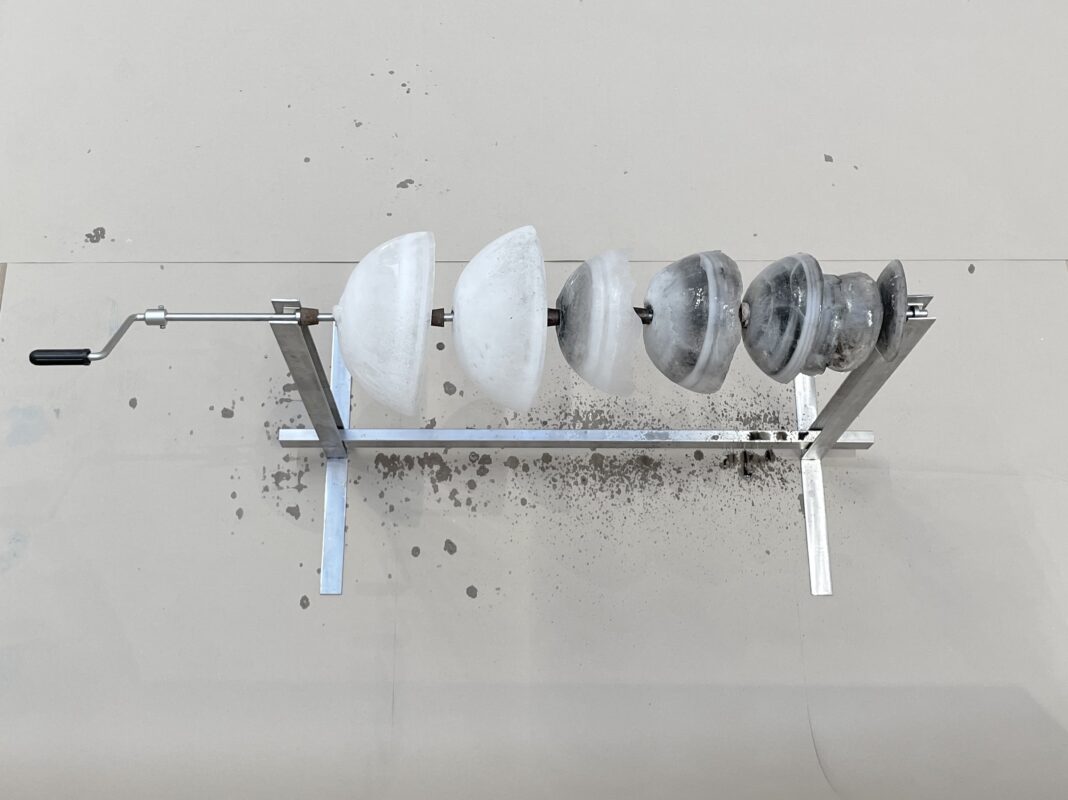
Ice Machine. Fast Instrument is the prototype of a sculptural musical instrument based on a glass harmonica.
Benjamin Franklin (1706-1790), known as an influential statesman and inventor, such as of the lightning rod, was, according to tradition, fascinated by the sound of glass playing: by flow-touching the rim of a round glass body or drinking glass with moist fingertips, a tone is produced depending on the size, shape, and fill quantity. In 1761, Franklin devised a way to mechanize the process, developing what he called the “glass harmonica.” Its crystal bowls are threaded onto a spindle with the openings for suspension at the bottom. The uniform circular motion—usually generated by a pedal—produces a spherical sound that, depending on the wall thickness and size, generates a fixed frequency when played.
Numerous reports in 18th-century music journals describe the effect of the extraordinary sound, with descriptions ranging from delight to fainting spells. The painter Angelika Kauffmann played the instrument, and W.A. Mozart, C. Saint Saëns, P.I. Tchaikovsky, R. Strauss, and G. Donizetti composed for the glass machine, Glaslmaschine what L. Mozart called them. It is the first instrument to be called a “harmonica,” a term that today encompasses everything from reed to slide instruments.
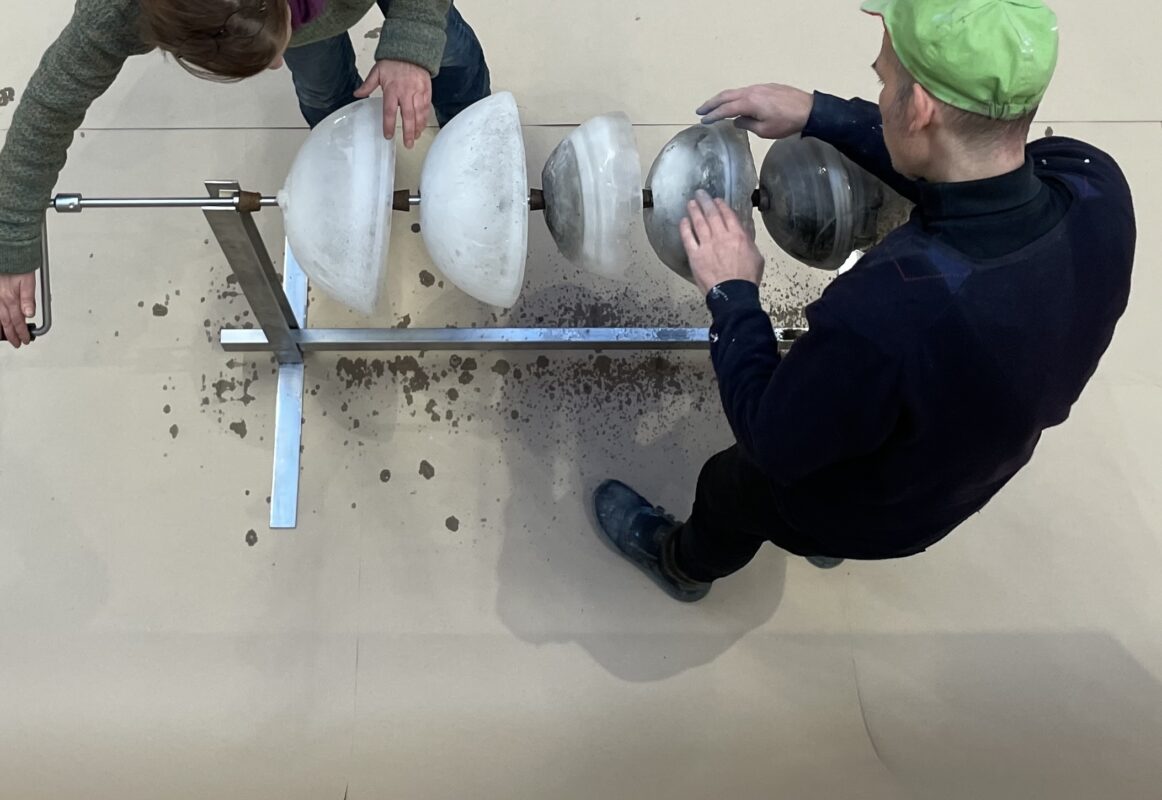
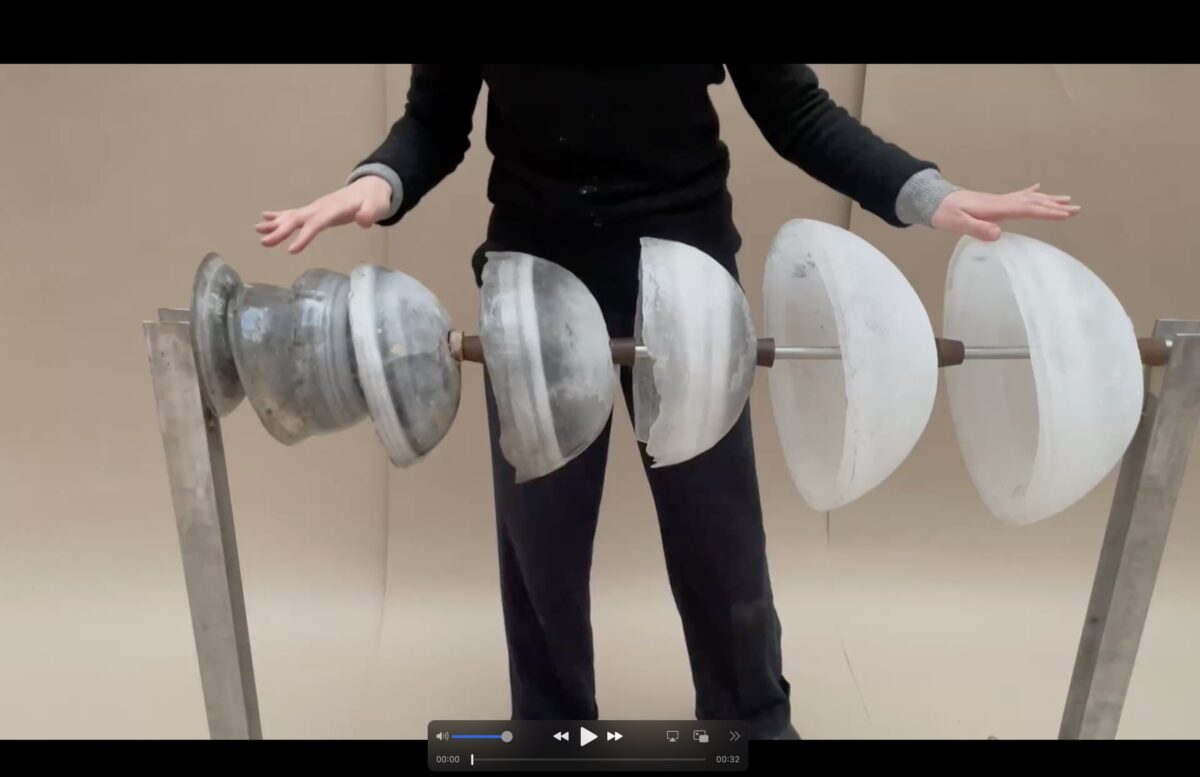
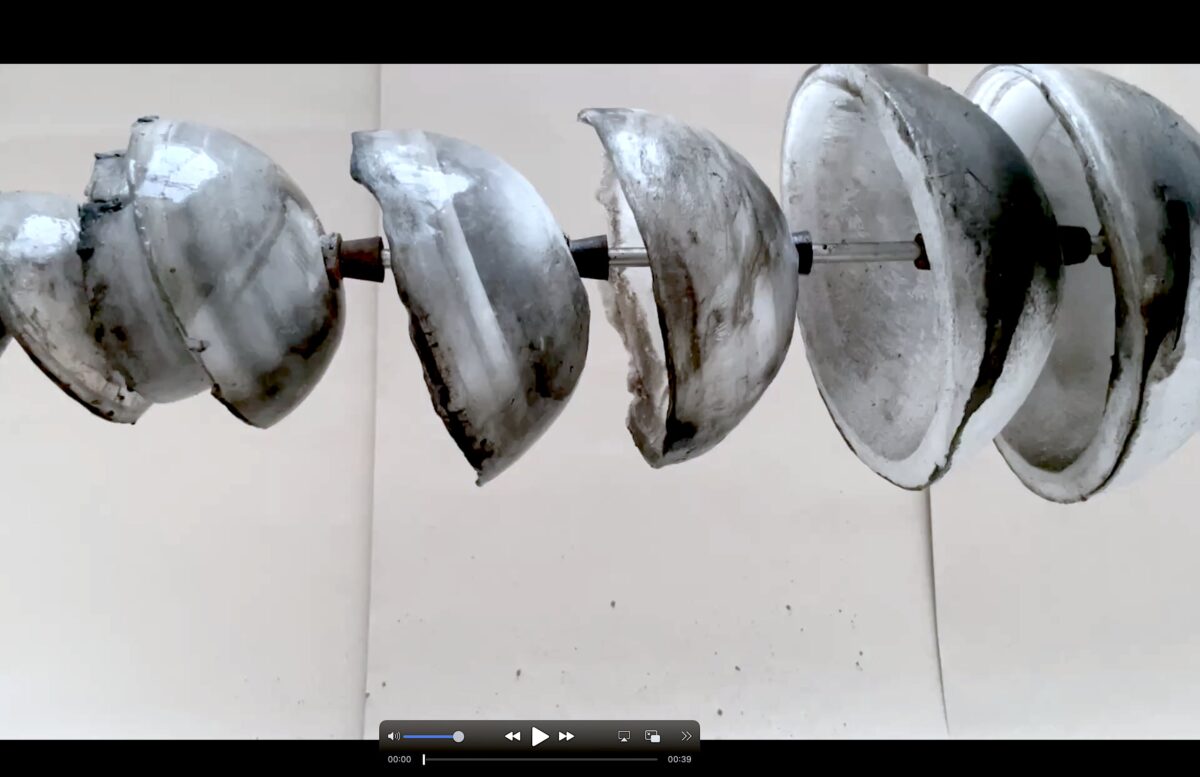
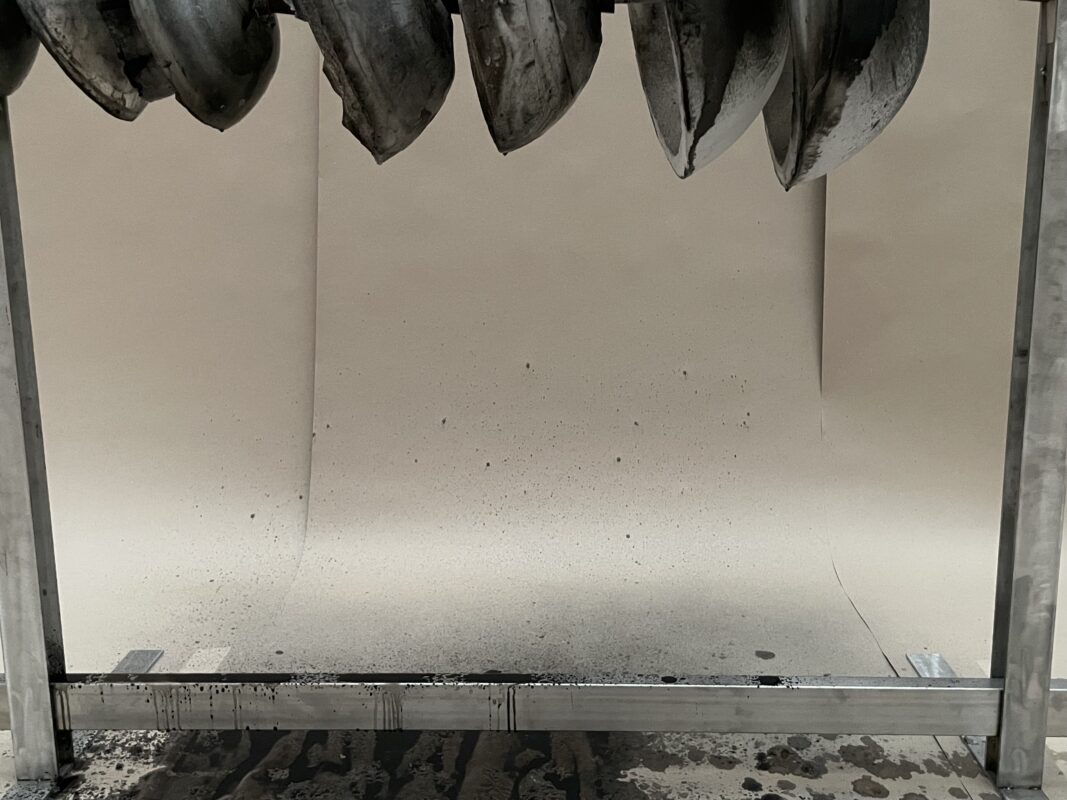
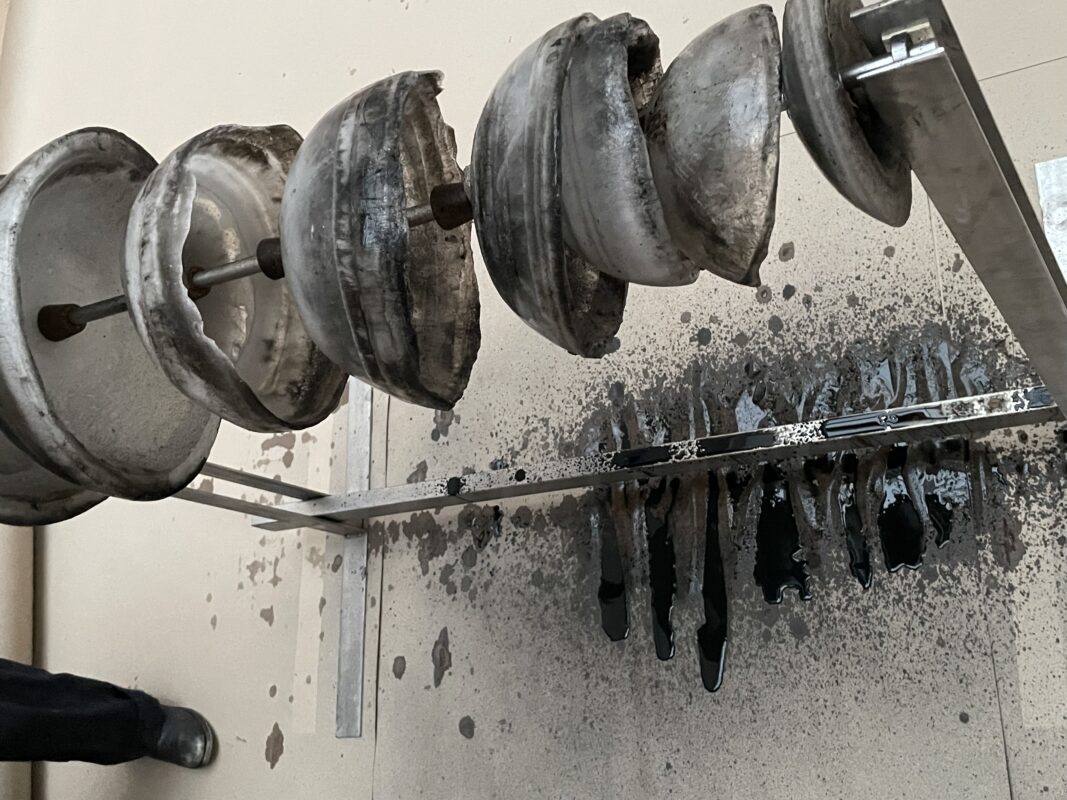
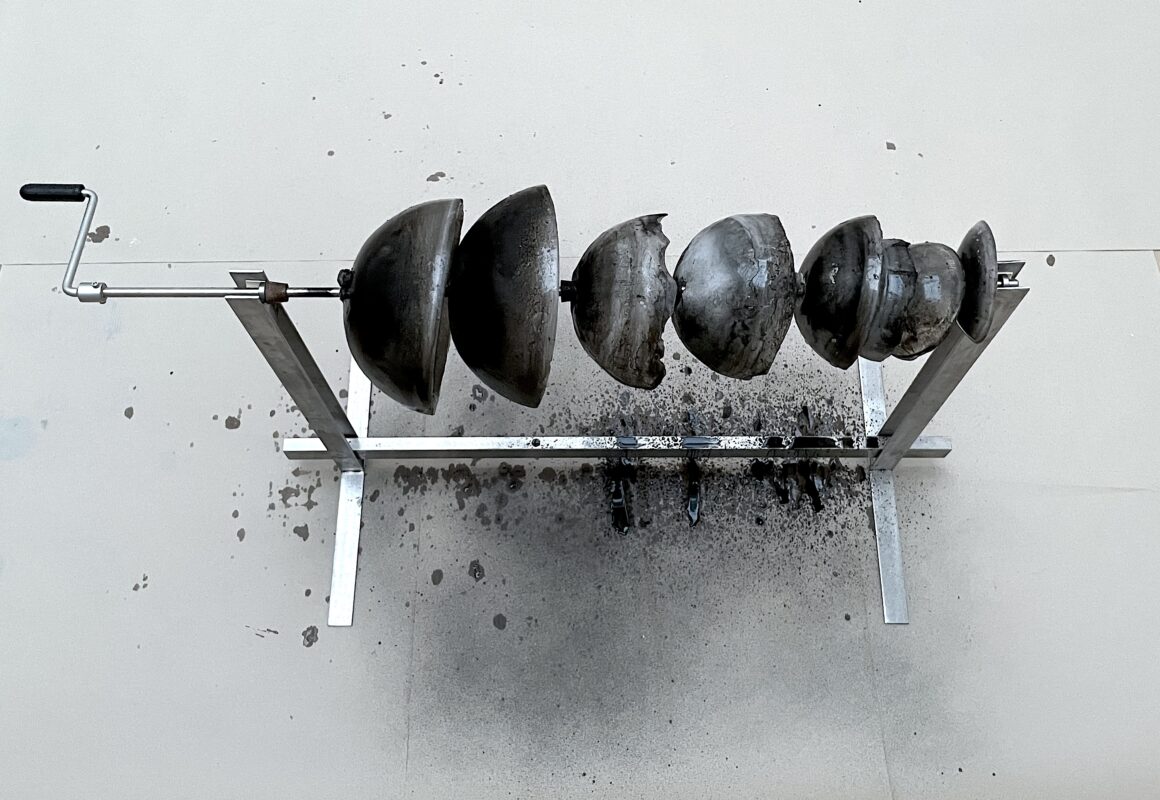
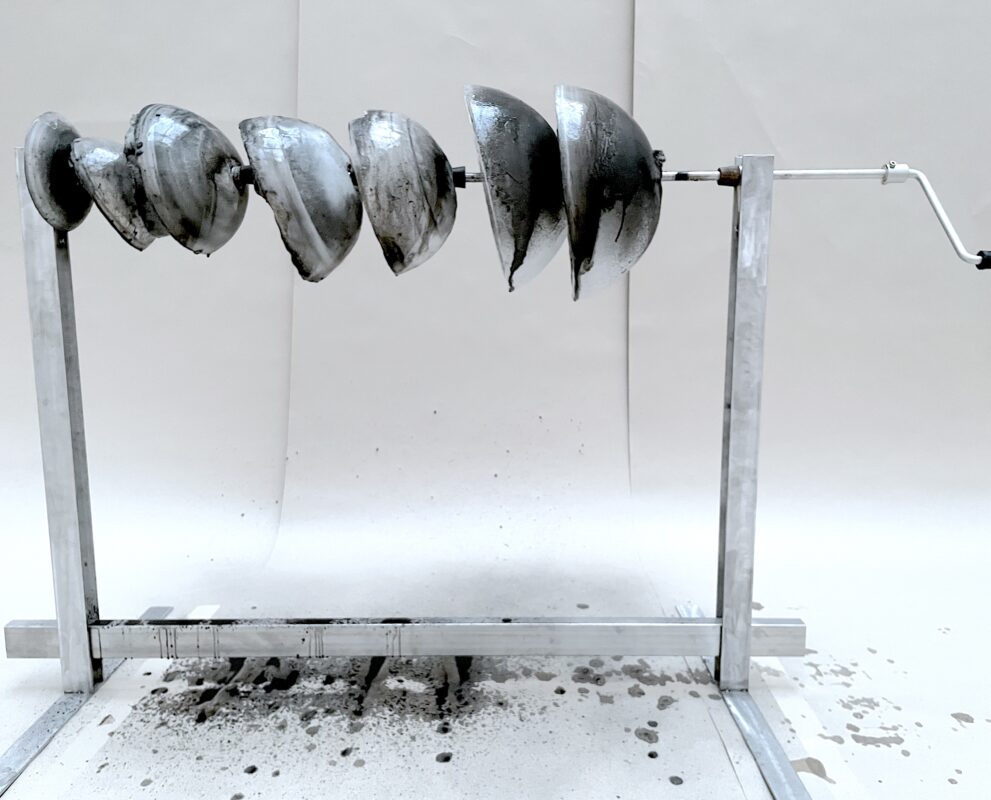
In the ice harmonica the shell-shaped vessels are replaced by poured and frozen water/ink ice. As with Franklin half tones and shells are white and the remaining seven are colored. Eight shells pierced at the bottom are threaded onto the connecting central axis at a 90° angle and can be rotated at the end of the horizontal axis by means of ball bearings and a crank. Playing the ice does not require moistened fingers, and depending on the progress of the melting, the sound and its spectrum change during the recrystallization of the ice at room temperature: from bright glassy tones to percussion. This instrument is also not for the faint of heart. The shapes of the fixed-pitch bells increasingly throw water droplets onto the floor during play. In motion, it is reminiscent of an organism or physical apparatus, such as those of Tesla or Theremin.